

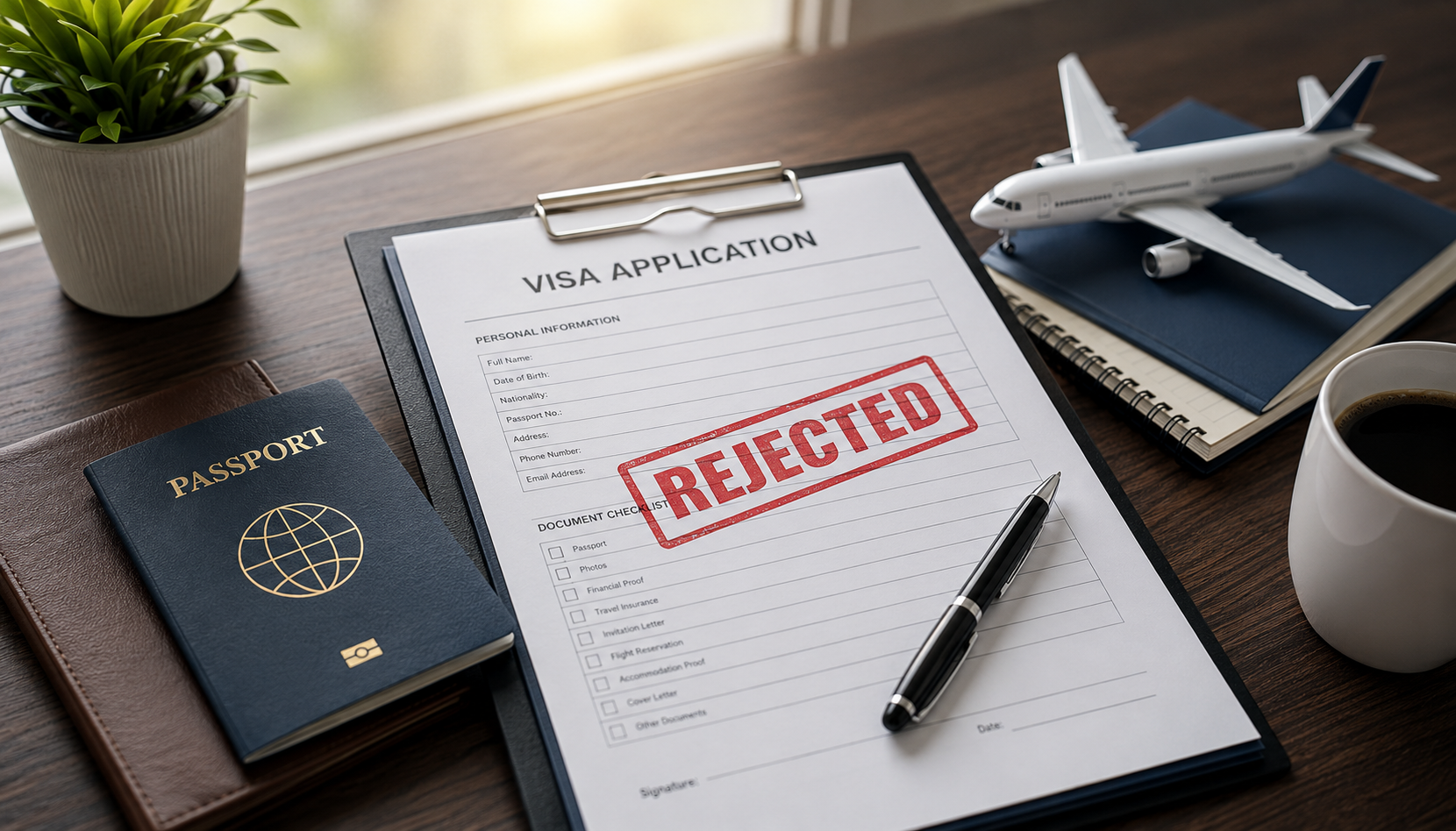

We get this a lot: someone comes in holding a rejection letter, completely confused, saying some version of “I met every requirement — so why was I refused?”
Here’s the thing. Nine times out of ten, it isn’t about eligibility at all. It’s something small. A signature that got missed. A bank statement that looks a little off. A cover letter that leaves the officer with more questions than answers.
After going through more applications than we can count at this point, we keep seeing the same mistakes pop up, over and over. So here they are, laid out plainly, along with what actually helps.
1. Sending in documents that are incomplete or just plain outdated
Honestly, this is the big one. Checklists get updated more often than people realize, and a lot of applicants are working off a list that’s a year old, or worse, one their cousin used for a completely different country.
Go check the current, official checklist for your exact visa type and country — not some generic “visa documents needed” article you found through a Google search. And if something has an expiry window, like a police clearance or a medical exam, it still needs to be valid on the day you submit, not just the day you started the application.
2. Little inconsistencies across your paperwork
Officers compare everything, down to the smallest detail. Your name spelled slightly differently on your bank statement than on your passport. A job title on your employment letter that doesn’t quite match your resume. None of this is usually intentional, but it still raises a flag, and flags slow everything down.
Before you hit submit, put every document next to each other and go through them line by line. Names, dates, addresses, job titles — all of it needs to line up exactly.
3. A statement of purpose that could’ve been written by anyone
We see this constantly. People either skip the personal statement entirely or grab a template off the internet and swap in a few details. And officers can tell. They read hundreds of these, so a copy-paste job stands out immediately.
Yours needs to actually say something. Why this specific country or program, why now, what you’re planning to do afterward, and how any of it connects to what you’ve already done. “I want a better future for my family” is a nice sentiment, but it doesn’t give an officer anything real to evaluate.
4. Money that’s there but doesn’t look right
This one’s less about having enough funds and more about how those funds are shown. A big deposit that lands in your account right before you apply, with no explanation? That’s one of the fastest ways to get flagged. So is handing over six months of bank statements with zero context and expecting someone else to figure out what’s going on.
Show a steady financial history. If there was a large transaction, add a short note explaining it. And make sure the total clearly covers whatever’s required — tuition, living costs, whatever it is — with a bit of a cushion, not the exact bare minimum.
5. Waiting until the last minute to apply
Processing times you see online are estimates. That’s it. Peak seasons, an incomplete file, a random extra check on your case — any of these can add weeks you didn’t plan for. We’ve watched people apply two weeks before their flight and just hope for the best, and it’s one of the more painful, avoidable situations we deal with.
Apply as early as the system lets you, and give yourself room for things to take longer than expected. They often do.
6. Not taking the interview seriously enough
Some people spend weeks perfecting their paperwork and then barely think about the interview until they’re sitting in front of the officer. But that interview exists specifically to check whether what you’re saying matches what’s on paper. The questions are usually simple — your job, your finances, your plans — but they need simple, confident answers.
Practice saying it out loud beforehand, in your own words, without rushing through it. If you find yourself struggling to explain your own application, that’s usually a sign something in the paperwork needs another look first.
7. Leaving out a past refusal or issue
If you’ve been refused before, overstayed somewhere, or had any kind of immigration hiccup, leaving it off your new application because you’re worried it’ll hurt your chances almost always makes things worse. These systems talk to each other more than most people assume, and getting caught hiding something looks far worse than the original issue ever did.
Just be upfront about it. Explain what’s changed since then. Most officers respond a lot better to honesty than to something they find out on their own.
Getting refused isn’t usually about whether you actually qualify. It’s about how everything comes together — the consistency, the presentation, the timing. And the good news is every single mistake on this list is fixable before you ever hit submit, if you take the time to actually go through your application with fresh eyes.
If you’d rather someone else double-check it for you before you send it off, that’s what we’re here for.
Contact BALKEN ELITE today for a professional visa application review and move forward with confidence. Your journey starts with the right guidance.